The Era of Ideas Has Arrived — But Only for Those Who Execute

Are you still building… or already live? That question used to be irrelevant. Now it's everything.
Because in 2026, the gap between people who think and people who ship is no longer small.
It's exponential.
We Are Living in a Compressed World
There was a time when building a business meant:
- Months of planning
- Hiring developers
- Endless revisions
- Delayed launches
That time is over.
Today:
- One person can build what teams used to build
- One week can replace six months
- One idea can become a live, revenue-generating asset almost instantly
This isn't hype.
It's infrastructure catching up with ambition.
The Unit of Progress Has Changed
AI didn't just make things faster.
It changed the unit of progress.
Before, progress looked like:
Plan → Build → Launch → Learn
Now it looks like:
Idea → Launch → Learn (same week)
That shift is everything.
Because now:
- The person who launches first learns first
- The person who learns first adapts first
- The person who adapts first wins
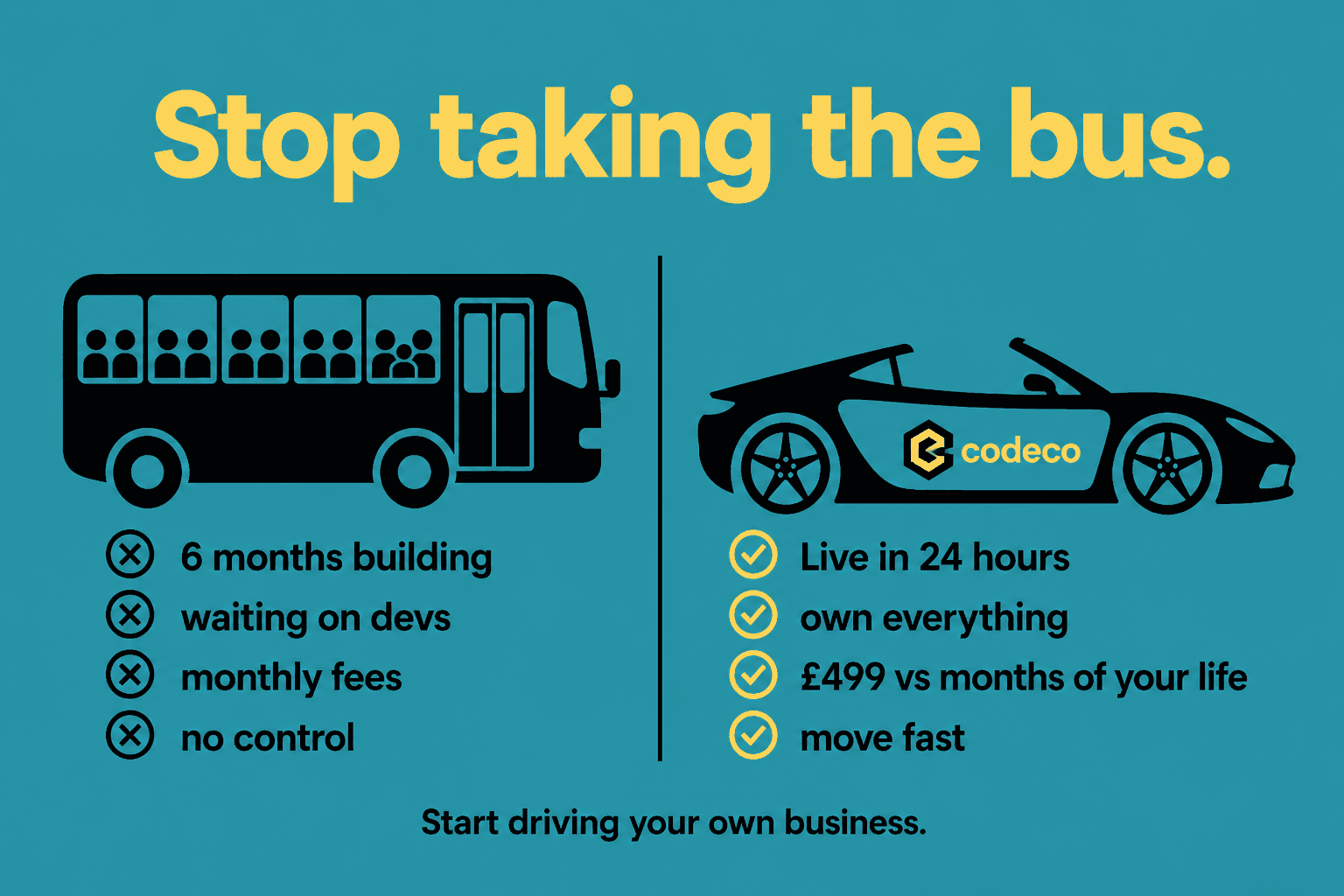
Walking vs Driving
Think of it like this.
Before, you were walking. Step by step. Slow. Manual. Limited.
Now? You're in a vehicle. You can accelerate. Cover distance faster. Change direction instantly.
Same road. Different velocity.
The people still walking aren't less intelligent. They're just not using the engine.
The Bottleneck Has Moved
For years, the bottleneck was coding, design, and infrastructure.
That's gone. Solved. Commoditized.
The real bottleneck now is:
- Ideas
- Execution speed
- Decision-making
Let that sink in.
The rare skill is no longer building. It's choosing what to build — and shipping it fast.
Most People Are Still Playing the Old Game
They're still overthinking, over-designing, over-engineering. Perfecting things no one has used yet.
Meanwhile, the market is rewarding:
- Speed
- Simplicity
- Momentum
You don't need more time. You need less hesitation.
Build First. Understand Later.
This sounds wrong. But it's how modern markets work.
You don't research endlessly, validate for months, or plan every edge case.
You:
- Ship
- Observe
- Adjust
Reality beats assumptions. Every time.
Speed Is Now a Business Advantage (and an SEO Advantage)
Here's what most people miss — speed isn't just operational. It's discoverability.
Search engines now reward:
- Fast-loading sites
- Structured content
- Fresh iteration
- Real user signals
A business that launches early gets indexed earlier, learns keyword performance faster, and builds authority over time.
Waiting to "get it perfect" is not neutral. It's a ranking disadvantage.
The Rise of Execution Systems
In 2026, winning businesses are not built on ideas alone. They're built on execution systems — systems that:
- Remove setup friction
- Eliminate repetitive work
- Allow rapid iteration
- Turn ideas into assets quickly
People are no longer asking "How do I build this?"
They're asking: "How fast can I launch this?"
From Idea to Asset
An idea is worthless until it exists.
A real asset can be a live website, a SaaS product, a landing page, a service offer, or a content hub.
Once it exists, it can capture leads, generate revenue, collect feedback, and improve over time.
That's the difference between thinking and building.
The New Workflow
Forget the old model. This is the loop that wins now:
- Idea
- Launch immediately
- Capture users
- Get feedback
- Refactor
- Repeat
Not yearly. Not quarterly. Weekly.
The Danger of Delay
Here's the uncomfortable truth.
While you're thinking, tweaking, and perfecting — someone else is launching, learning, and iterating.
And now they're ahead.
In this era, delay is the biggest risk. Not failure. Delay.
Why Most Projects Never See the Light of Day
After years in development and product work, one pattern is clear.
Projects don't fail because of bad ideas. They fail because:
- They never launch
- They get stuck in development
- They become too complex
- They lose momentum
The biggest killer is friction.
Removing Friction Is the Real Advantage
The businesses that win today are not necessarily smarter. They're just faster at removing friction between idea and execution.
That's it. That's the entire game.
The speed vs delay gap:
| Old model | New model |
|---|---|
| Plan for months | Launch this week |
| Hire a dev team | Deploy a ready system |
| Wait for "perfect" | Ship and improve |
| £3,000–£7,000 build cost | £499 one-time |
Codeco Principle: Ideas → Income
At Codeco, everything is built around one shift:
From: "I have an idea…"
To: "It's live, users can sign up, and I can get paid."
Fast. Because speed changes everything — it reduces risk, increases learning, and creates opportunity.
What This Means for You
If you're a founder, developer, service business, or creator — this is your moment.
You don't need a bigger team, more funding, or more time.
You need a clear idea, a fast path to launch, and the willingness to ship.
The Market Is Rewarding Action
This is visible everywhere:
- Indie founders launching in days
- Micro SaaS products gaining traction fast
- Creators building audiences with simple tools
- Agencies moving from months to days
The barrier is gone. The hesitation remains.
The Window Is Open (But Not Forever)
Moments like this don't last. Eventually standards rise, competition increases, and speed becomes expected.
Right now? Speed is still an advantage.
Final Thought
We are in a moment where tools are cheap, power is accessible, and speed is unmatched.
This doesn't happen often.
This is the era of ideas.
But only for people who execute them.
If you're serious about turning ideas into something real — see how you can launch a full business in 24 hours, explore Business in a Box, or just watch how it works and decide after.
Because at some point… you either start. Or you keep thinking.
Ready to build yours?

 Message us